Can a hospital refuse to give you your prescription? What my malaria diagnosis taught me about medical exploitation on the road
Can a clinic refuse to hand over your prescription? A malaria diagnosis on the road taught me it cannot, and that a diagnosis you paid for belongs to you. A vigilance guide and pre-trip health checklist for field teams and travellers anywhere in the world.
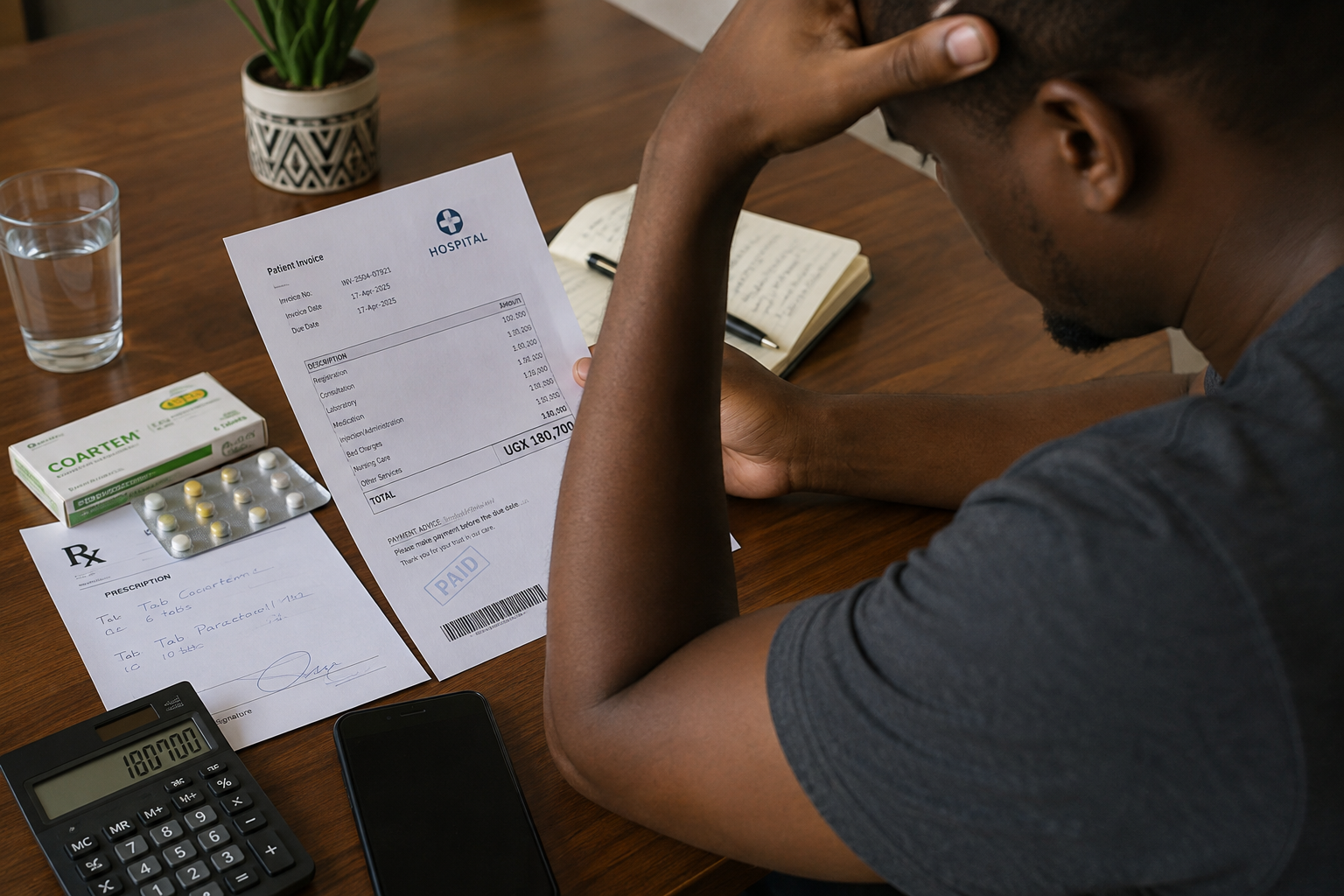
A field worker's guide to staying vigilant when you seek treatment away from home, anywhere in the world.
Short answer for anyone in a hurry: Once you have paid for a consultation and lab tests, the diagnosis and results are yours. You are entitled to your prescription, and you are free to buy the medication at any licensed pharmacy you choose. If a health centre withholds your prescription to force you to buy its in-house drugs, that is a red flag. Ask for your results and prescription in writing, and fill it elsewhere.
Now let me tell you how I learned that the hard way.
The Friday I ignored my body
It was one of the busiest Fridays of the month. The workday closed and I was drained, but on reaching home I remembered I still had to confirm that my client's scheduled posts had gone live. I told myself thirty minutes, then the laptop goes off.
Long before I knew it, it was 8 pm. My shoulders arched. I told my wife, "My shoulder ached, hopefully it's just a sign of fatigue." She laughed and said, "You said you were going to check the posts for five minutes. What are you doing in Quillbot?"
I finally shut the laptop at 9 pm and lay down. Fifteen minutes later, a severe headache and fever hit me. I took paracetamol, then later some other tablets. It became one of the longest, most painful nights I can remember.
Chasing a cure in the wrong places
In the morning I reached for hibiscus tea, hoping it would ease the fatigue. Nothing. I tried a little aloe vera tea. The temperature dropped, but the body pain stayed.
On Saturday I walked into a pharmacy and asked if there was anything for fatigue. The pharmacist recommended some tablets, then said something wise: if the symptoms persist, get a proper check-up. That is how I survived Saturday, the pain switching on and off every five hours as each dose wore off.
I had made the classic mistake field workers make: I kept treating a symptom I had guessed at, instead of paying for a diagnosis I could trust.
Sunday: the diagnosis, and the trap
On Sunday I walked into a medical health centre. I paid for a consultation and lab tests, and both were genuinely affordable: 10,000 UGX for the consultation and 25,000 UGX for all the lab work. The results were clear. Malaria.
I said to the doctor, "Now that we know the issue, what is the treatment plan?" She told me to see the reception for the bill.
At reception, the bill was 257,000 UGX.
Read those numbers again. The consultation and every lab test together came to 35,000 UGX. The rest, more than 220,000 UGX, was the in-house medication. I told the receptionist plainly: "I cannot afford your treatment plan, but kindly write for me the prescription. I believe I can get the medicine elsewhere."
She refused.
In those few minutes, it felt like the malaria itself paused while I found my voice. Why withhold the prescription when I had already paid for the consultation and the lab tests? I insisted. I collected my lab results and receipts, walked to a pharmacy, and bought the exact same medication I needed for 30,000 UGX.
Same drugs. Same illness. A difference of more than 190,000 UGX, decided entirely by where I was standing when I bought them.
I am now back to full health, thanks to the care of my family. This happened along a busy road in Kampala. I have left the staff unnamed on purpose, because this is not about two people. It is about a pattern that field teams, travellers and film crews meet everywhere in the world.
Why this matters more when you are on the road
When you are away from your home base, on a field assignment, a film fixture, or a shoot in an unfamiliar town, you are exactly the person these situations exploit. You are tired, you do not know the local prices, you have no regular doctor nearby, and you often feel you have no time to argue. That combination is what gets people to pay 257,000 UGX for 30,000 UGX of medicine.
Good healthcare should be affordable. Most providers are honest. But a minority of health centres and hospitals will take advantage of a stranger in a hurry, and your defence is not money. It is knowing your rights and having a plan before you travel.
Your rights when seeking treatment away from home
- Your diagnosis and lab results belong to you once you have paid for them. Ask for them in writing.
- A prescription is a medical instruction, not a sales lock. In most places you can fill it at any licensed pharmacy.
- Separating diagnosis from dispensing is normal and reasonable. You are allowed to say, "Please give me the prescription, I will buy elsewhere."
- Keep every receipt. Receipts and lab results are what let a second provider treat you safely and let you challenge an unfair bill.
A pre-trip health checklist for field teams and film crews
Use this before any deployment, anywhere in the world. Print it, share it with your crew, keep it in the trip folder.
- Confirm what your health insurance or travel cover includes, and carry the policy number and emergency line offline.
- Note two or three reputable clinics or hospitals at your destination in advance, with prices where possible.
- Pack a basic kit: your regular medication, painkillers, rehydration salts, a thermometer, and a small first-aid set.
- For malaria zones, take prophylaxis where advised, use repellent, and treat fever within 24 hours as a possible emergency, not fatigue.
- Agree one rule as a team: any fever, headache or persistent pain gets a lab test, not a guess.
- When you visit a provider, ask for the price of consultation and tests before any treatment begins.
- Always request your lab results, diagnosis and prescription in writing, and keep every receipt.
- If a bill feels wrong, you may pay only for the consultation and tests, take your prescription, and buy medication at an independent pharmacy.
- Assign a "well-being lead" on every field trip whose job is to watch for exhaustion and push teammates to rest and seek care early.
- Do not self-medicate on guesses for more than 24 hours. A cheap lab test beats an expensive wrong guess.
The real lesson
My mistake was not that I got malaria. It was that I ignored my body while chasing a client deadline, then tried to outsmart an illness with guesses instead of a diagnosis. The health centre's mistake was trying to turn my diagnosis into a captive sale.
Stay vigilant. Rest before your body forces you to. Pay for the truth of a diagnosis, then protect your right to act on it wherever the price is fair.
If this saved you a hard lesson, follow my work at binomugisha.org, where I write about field work, storytelling and staying human under pressure. Share this with the one person on your team who never rests.
Jonathan Mugisha