Strategic Storytelling in Uganda: A Plain Guide for NGOs and Businesses
Strategic storytelling explained in plain words: how NGOs and businesses in Uganda and East Africa can show what they do, prove it and win trust.
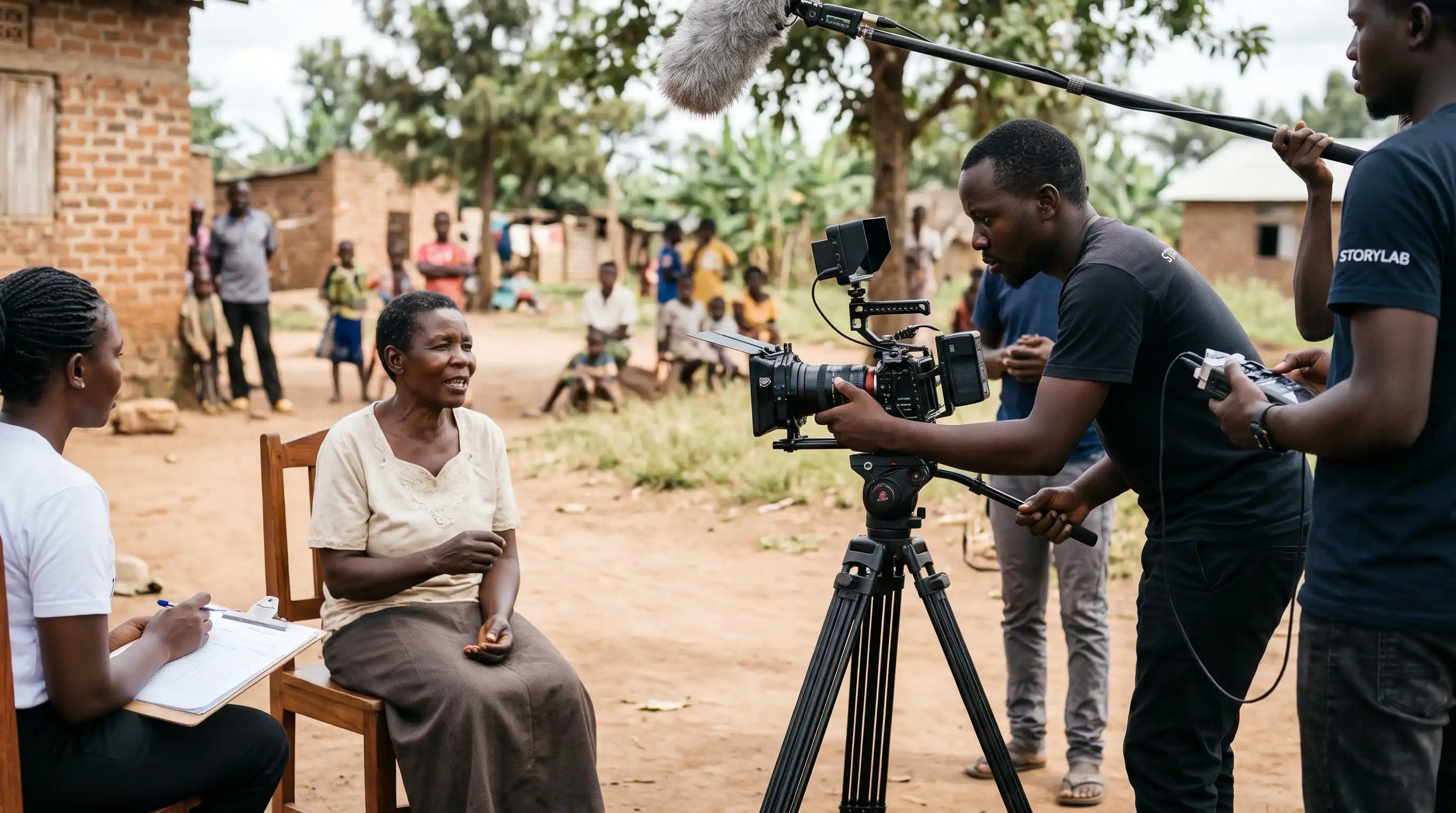
Most business owners can explain what they do in two minutes, face to face. Their website, brochure or proposal takes ten, and still loses the reader.
The same thing happens in NGOs. A programme that changed lives in a village becomes three paragraphs of technical language, and the funder who needed to feel it never does.
I have spent years writing and filming for NGOs and international partners, where an unclear message can cost a project its funding. The cause is rarely bad writing. It is that nobody asked the audience what mattered.
This guide explains what strategic storytelling is, why it matters for organisations in Uganda and East Africa, and how NGOs and businesses can use it, step by step.
What is strategic storytelling?
Strategic storytelling is the practice of using real people, evidence and results to explain what an organisation does, who it helps and why it matters, so that a specific audience takes a specific action. Every story is built around a goal, such as winning a grant, earning a customer or changing a decision.
It is different from advertising, which tells people to buy. It is also different from general public relations, which manages how an organisation is seen. Strategic storytelling shows what you do and proves it, in plain language.
What strategic communications means in Uganda and East Africa
Strategic communications is the planning behind your messages: who you need to reach, what they need to understand, and which channel and format will reach them. Storytelling is the part of that plan that people remember.
In Uganda and across East Africa, this planning has to deal with three realities.
- Competition for attention and funding. NGOs, social enterprises and businesses in Kampala and across the region compete for the same donors, partners and customers. The one that is easiest to understand is often the one that gets the meeting.
- Many audiences at once. One organisation may speak to international donors, government officials, local communities and customers in the same month. Each group needs a different message about the same work.
- Phones come first. Most people in the region read, watch and share on their phones. Long documents and heavy websites lose people quickly, while short video, clear photography and simple pages hold them.
A message written for a head office in another country often misses all three. Work done in Uganda, for audiences that include Uganda, should be communicated from Uganda.
Storytelling for NGOs in Uganda
Donors read hundreds of reports and proposals. They are not looking for the longest one; they are looking for the one that shows what changed, for whom, and how they know.
A strong NGO story has five parts:
- A person. One real woman, farmer, student or health worker, named with permission.
- A problem. What was hard before the programme, in everyday words.
- An action. What your team actually did, not what the project framework says.
- A result. What is different now.
- A number. The figure that proves it is not a one-off.
This works in annual reports, grant applications, donor updates, documentaries and social media. The structure stays the same; only the length and format change.
The most common mistake is starting with the organisation instead of the person. "Our programme empowers communities" tells the reader nothing. "Grace sold her first harvest at a fair price this year" tells them everything.
Storytelling for business in Uganda
Business owners face a different problem with the same cause. They know their work so well that they forget customers do not.
Try this five-second test. Show your homepage to a stranger for five seconds, then ask:
- What does this company do?
- Who is it for?
- What would you do next?
If they hesitate on any one of these, your customers hesitate too. They will not tell you. They will just leave.
Here is my view, and you may disagree: more content will not fix this. Fewer, consistent, clearer copies will. Business storytelling is not a longer "About us" page. It is one clear answer to what you do, who it is for and why they should trust you, repeated the same way on your website, your proposals and your social media.
How to tell a strategic story in four steps
- Start with the audience. Write down who you want to act and what you want them to do. A donor, a customer and a partner need different stories.
- Listen before you write. Speak to the people doing the work and the people it affects. The best lines are usually already in their words.
- Choose one person and one change. Stories with a single clear subject beat summaries of everything you do.
- End with one next step. Tell the reader exactly what to do: apply, call, visit, fund or share.
Old habits and strategic storytelling
Old habit | Strategic storytelling | |
|---|---|---|
Starts with | The organisation | The audience |
Language | Technical terms and long sentences | Plain words people use |
Proof | Claims and activities | Real people, evidence and numbers |
Format | One long document | The right format for each channel |
Ends with | A summary | One clear next step |
Frequently asked questions
What is strategic communications?
Strategic communications is the planning of what an organisation says, to whom, through which channels and for what purpose. It connects messages to goals, such as funding, sales or public understanding, instead of producing content without direction.
Why do NGOs in Uganda need storytelling?
NGOs in Uganda compete for limited donor funding, and funders read many reports. Clear stories backed by evidence show what changed and for whom, which helps donors understand the work and trust it.
Is storytelling only for large organisations?
No. Small organisations and growing businesses often benefit most, because they have less time and budget to waste on messages that do not land. One clear story, used well, can serve a website, a proposal and a pitch.
What is the difference between storytelling and public relations?
Public relations manages how an organisation is seen by the public and the media. Storytelling is one tool within it, focused on showing real people and results. Strategic storytelling adds a clear goal and audience to every story.
How do I get started?
Pick one audience and one document, such as your homepage or your last donor report. Ask a stranger or a colleague outside the project to explain it back to you. Where they get confused is where the story needs work.
Work with binomugisha.org
binomugisha.org is a communications practice in Kampala, Uganda, working with NGOs, international partners and businesses across Uganda and East Africa. The work includes:
- Communications strategy and mentorship: donor messaging, media training and a plain-language review of how your work is presented today.
- Documentary and field production: on-location filming, event livestreams and photography that show real outcomes.
Preparing an impact report, grant application, public launch or new website? Send me what you have, and I will tell you where the story gets lost and how to fix it.
Studio and office: Suite MCG 09, Mirage Complex, Port Bell Road, Kampala, Uganda Website: binomugisha.org Email: info@binomugisha.org WhatsApp: +256 756 180429